

Money, Career Strategy & Autonomy
Income Is Not Wealth.
The financial conversion most people are never taught: how income becomes ownership, optionality, and eventually autonomy.
A person can earn $100,000 a year and build wealth.
Another can earn $500,000 a year and remain financially fragile.
A business owner can generate impressive revenue and own very little that would survive without their continued labor.
An executive can earn millions across a career and still depend upon the next paycheck.
A household can appear affluent while carrying large fixed obligations, limited liquidity, depreciating assets, and little ownership outside the home.
These situations seem contradictory only if income and wealth are treated as the same thing.
They are not.
Income is a flow.
Wealth is a position.
Income describes money entering a financial system over a period of time.
Wealth describes what remains, what is owned, what is owed, what can continue producing value, and what choices those resources make possible after the current earning period ends.
That distinction is one of the central ideas in The 52 Laws of Money.
Learning how to earn matters.
But earning is only one part of the financial system.
The deeper challenge is conversion.
What happens to income after it arrives?
Does it become consumption?
Taxes?
Interest?
Debt repayment?
Liquidity?
Ownership?
Productive assets?
Business equity?
Future income?
Optionality?
Or does nearly all of it disappear into maintaining a life that requires the next payment to continue?
The difference between income and wealth is often found in that conversion.
Income is a flow. Wealth is a position.
A High Income Can Finance a Fragile Life
Consider an experienced executive earning $400,000 a year.
The household may have:
a large home;
multiple vehicles;
private education expenses;
frequent travel;
club memberships;
premium services;
significant insurance costs;
high taxes;
and extensive recurring obligations.
From the outside, the household looks wealthy.
Creditors may treat it as wealthy.
Banks may offer larger loans.
Credit limits may increase.
The household gains access to more consumption precisely because its income is high.
Then the employer restructures.
The bonus disappears.
The position disappears.
The income stops.
The mortgage does not.
The vehicles continue depreciating.
Taxes remain.
Insurance remains.
Education costs remain.
Family obligations remain.
A lifestyle constructed around the continuation of income now reveals something that was difficult to see while the money was arriving:
The household had a powerful income statement and a weak balance sheet.
High income created consumption capacity.
It created status.
It created access to credit.
It may have created comfort.
But unless some portion of that income was converted into assets, reduced liabilities, liquidity, or productive ownership, the income did not necessarily create financial independence.
This is why income should never be confused with wealth.
Income Is a Flow. Wealth Is a Stock.
The distinction sounds technical, but it changes how money is understood.
A salary is a flow.
A consulting fee is a flow.
A business distribution is a flow.
Rental income is a flow.
Interest is a flow.
Money passes through time.
Wealth is different.
Wealth appears on the balance sheet.
It may include:
cash;
ownership in businesses;
investment assets;
property equity;
intellectual property;
retirement assets;
other productive claims;
minus liabilities.
Income tells you something about what is entering the system.
It does not tell you what the system has retained.
Imagine two professionals.
Both earn $250,000 annually.
The first has been earning at that level for fifteen years.
Nearly every increase in income has produced a corresponding increase in consumption.
Housing became more expensive.
Cars became more expensive.
Vacations became more expensive.
Recurring commitments increased.
Debt capacity expanded.
The professional earns substantially more than before but remains highly dependent upon continuing at the same income level.
The second professional also improved their standard of living.
But some portion of rising income repeatedly changed the balance sheet.
Debt declined.
Liquidity grew.
Ownership increased.
Productive assets accumulated.
The professional developed credible alternatives to the current job.
The two people may have identical income.
They do not have identical financial positions.
One has income.
The other is gradually converting income into economic choice.
Income
- Salary
- Bonus
- Fees
- Business distributions
- Other current inflows
Depends on continued earning conditions.
Wealth
- Liquidity
- Reduced liabilities
- Ownership
- Productive assets
- Transferable business value
- Other durable economic claims
Can survive beyond the current earning period.
A high income can create the appearance of wealth without creating durable ownership.
The Missing Financial Skill Is Conversion
Most discussions of personal finance focus on either earning or spending.
Earn more.
Spend less.
Both matter.
But the space between them deserves its own concept.
I call it conversion.
Conversion occurs when part of current income creates value that survives beyond the period in which the income was earned.
That might happen by:
building an emergency reserve;
reducing principal on a liability;
acquiring ownership;
building business equity;
funding a long-term asset;
purchasing productive equipment;
retaining earnings inside a viable enterprise;
or developing something with transferable economic value.
The details vary enormously by household and circumstance.
The principle is simpler:
Some portion of today's flow must change tomorrow's financial position if income is going to become wealth.
Consider a $20,000 liability.
If $1,000 of income is used to reduce principal, no new asset appears.
Yet the balance sheet improves.
A future claim on income has been reduced.
Conversion can therefore occur on either side of the balance sheet:
increase durable assets
or
reduce liabilities.
This is why simply asking, “How much did I save?” can be too narrow.
A better question is:
How much of what I earned changed my future financial position?
No allocation is universally correct. Different destinations create different future positions.
The Wealth-Conversion Sequence
A useful way to understand the progression is:
Income → Surplus → Conversion → Ownership → Productive Assets → Compounding → Optionality → Autonomy
These stages are related, but they are not interchangeable.
A failure at one stage can prevent progress at the next.
1. Income
Income is the starting flow.
It can come from labor, business ownership, contracts, investments, royalties, rents, or other legitimate sources.
Income matters because without resources entering the system, there is little available to convert.
But income by itself does not guarantee wealth.
A larger river does not tell you how much water remains in the reservoir.
2. Surplus
Surplus is the amount remaining after claims on current income have been satisfied.
This is where the wealth-building problem becomes constrained by reality.
For some households, surplus is substantial.
For others, necessary housing, food, healthcare, transportation, caregiving, taxes, and debt may consume nearly everything.
That distinction matters.
It is easy to moralize about saving when someone's income comfortably exceeds necessities.
It is much harder when there is no meaningful gap to convert.
Financial principles should not erase structural conditions.
A household cannot convert money that does not exist.
That means the wealth problem can sometimes require changes upstream:
greater earning power;
lower unavoidable costs;
debt restructuring;
more stable income;
access to benefits;
or other changes in the financial environment.
The existence of the principle does not mean everyone has equal capacity to act on it.
3. Conversion
Surplus becomes financially consequential when it is intentionally moved into something that improves future position.
Without conversion, surplus can remain temporary.
Money sits in an account.
Then spending expands.
The annual bonus arrives.
Then disappears.
A raise appears.
The lifestyle quickly absorbs it.
Conversion changes the direction of the money before consumption claims all of it.
This is the point at which income begins becoming something more durable.
4. Ownership
Ownership changes the relationship between labor and money.
A worker primarily earns by exchanging labor for compensation.
An owner may possess a residual claim on an asset, enterprise, property, or other economic system.
This does not make ownership inherently safe or profitable.
Businesses fail.
Assets decline.
Property requires maintenance.
Ownership can be concentrated, illiquid, leveraged, poorly governed, or economically worthless.
But ownership introduces a different possibility:
value may continue beyond the original unit of labor.
That distinction matters.
A consultant who earns $500 an hour possesses earning power.
If revenue stops whenever the consultant stops working, the business may contain little transferable value.
A founder who gradually builds systems, customer relationships, intellectual property, documented processes, recurring revenue, brand value, and an organization capable of operating beyond the founder's direct labor may be creating something different.
The income is beginning to become an asset.
Income creates potential. The later stages require conversion and are not guaranteed.
An author-developed editorial synthesis of principles from The 52 Laws of Money, not a validated financial model, formula, or guarantee.
A Business Can Produce Income Without Producing Wealth
Entrepreneurship is especially vulnerable to the income-wealth confusion.
A founder says:
“My business makes $1 million a year.”
What does that mean?
Revenue?
Gross profit?
Operating profit?
Owner compensation?
Cash flow?
Enterprise value?
A business can generate substantial income for its owner while possessing little value independent of that owner.
If every customer relationship depends on the founder...
if every sale requires the founder...
if delivery requires the founder...
if the intellectual property exists only in the founder's head...
if there are no transferable systems...
if contracts cannot survive ownership change...
then the owner may have created a highly compensated job.
That can still be valuable.
But it is different from building a transferable enterprise.
The relevant wealth question becomes:
What remains if my next hour of labor disappears?
That question applies far beyond entrepreneurship.
A professional career represents extraordinary human capital.
Education, experience, expertise, reputation, relationships, and judgment can produce substantial earning power.
But human capital usually cannot be sold separately from the person.
It cannot easily be transferred to heirs.
It does not automatically pay expenses after the person stops working.
And it may depend on health, market demand, reputation, or continued employment.
Human capital is enormously valuable.
But one function of a productive career is to create the opportunity to convert some human capital into financial capital while the earning engine is still operating.
A career is not a permanent financial asset simply because it paid well in the past.
What remains if my next hour of labor disappears?
Productive Assets Change the Equation
Ownership alone is not enough.
A person can own something that continually consumes resources.
That may still be worthwhile.
Homes, art, vehicles, collections, recreational property, and other assets may provide enormous personal value.
But if we are talking specifically about wealth formation, another distinction matters:
Does the asset have the capacity to produce continuing economic value?
A productive asset may generate:
cash flow;
appreciation;
business earnings;
licensing value;
rent;
interest;
dividends;
or another form of economic return.
The specific asset is less important to this article than the mechanism.
The transition from income to wealth becomes more powerful when current labor acquires claims capable of participating in future value.
This is the beginning of decoupling every future dollar from another hour of labor.
It does not eliminate work.
It changes the relationship between work and capital.
Compounding rewards what is allowed to remain.
Compounding Is Powerful Because the Base Changes
Compounding is often presented as financial magic.
It is mathematics.
A return is generated.
Some or all of that return remains in the system.
The next return is calculated against a larger base.
Repeat.
Time changes the scale.
But there is a critical condition:
Something must remain.
The manuscript's Law of Compounding expresses the principle simply:
Compounding rewards what is allowed to remain.
That can be beneficial.
It can also be destructive.
Returns can compound.
Debt can compound.
Fees can compound.
Mistakes can compound.
Reputation can compound.
Skills can compound.
Organizational advantage can compound.
The mechanism itself is neutral.
What matters is what is being allowed to accumulate.
This is why earning more without retaining ownership can be less powerful than it appears.
A large flow that repeatedly returns to zero must rebuild from zero.
A smaller flow that consistently leaves behind a productive base can create an increasingly different future.
No projected returns or financial-product assumptions are used.
Compounding Does Not Eliminate Risk
Any serious discussion of compounding needs an important correction.
Time does not automatically make money grow.
If the underlying process destroys value, time can magnify the damage.
Returns change.
Markets change.
Businesses fail.
Inflation affects purchasing power.
Taxes and fees interrupt accumulation.
Withdrawals change the base.
Concentration creates risk.
Compounding should therefore make extraordinary return promises more suspicious, not less.
The larger lesson is not:
“Find the highest return.”
It is:
Understand the process you are allowing to repeat.
Because repetition magnifies both strengths and weaknesses.
Wealth Is Not the Same as Liquidity
Another dangerous financial illusion occurs when net worth is mistaken for usable financial flexibility.
Someone may have substantial home equity and very little cash.
A business owner may have considerable enterprise value and struggle to meet payroll.
A household may own valuable assets but be unable to handle an immediate emergency without borrowing.
This is why wealth and liquidity must remain separate concepts.
An asset may contribute to wealth without being immediately usable.
A financial system can therefore improve its balance sheet while simultaneously becoming more fragile if too much value is locked into assets that cannot be converted when obligations arrive.
This creates another important question:
When will the value be needed, and how quickly can it become usable without unacceptable loss?
Wealth is not simply the highest possible number on a balance sheet.
It is a system.
Wealth Should Reduce Dependence, Not Merely Increase Numbers
Suppose two people each have a net worth of $1 million.
One owns a highly concentrated asset that is difficult to sell, produces no current income, and carries substantial ongoing obligations.
The other has resources distributed across forms that support liquidity, income, resilience, and choice.
Their net-worth numbers may be similar.
Their economic freedoms may be very different.
This points toward a more interesting purpose for wealth.
Wealth can create optionality.
Optionality is the ability to choose among credible alternatives.
A person with financial alternatives can:
leave a job without immediately losing housing;
decline a destructive client;
take time to search for better work;
fund a career transition;
move to another location;
care for a family member;
recover from illness;
start a business;
reduce working hours;
or simply negotiate from a stronger position.
The wealth is valuable not merely because it exists.
It is valuable because of the decisions it makes possible.
The purpose of a walk-away fund is not to make walking away inevitable. It is to make staying more voluntary.
The Highest Return on Money May Be the Ability to Say No
Financial independence is frequently described in terms of retirement.
That is only one expression of it.
A more immediate expression is refusal.
Consider an employee in a damaging workplace.
The employee may know the situation is unacceptable.
But knowing what should be done and possessing the financial ability to do it are different conditions.
Leaving may mean:
losing income;
losing health insurance;
relocating;
paying for childcare;
funding a job search;
or surviving several months without a paycheck.
A boundary without an alternative may have little economic force.
Money can help create the alternative.
The same logic applies to a business owner dependent on one client.
The owner may know the client violates boundaries, pays late, expands scope, or behaves destructively.
But if losing that account threatens the business, the owner has little negotiating power.
A stronger financial position can make it possible to enforce:
payment terms;
scope;
quality standards;
professional boundaries;
or ultimately the ability to leave.
This is where wealth begins becoming autonomy.
The purpose of a walk-away fund is not to make walking away inevitable. It is to make staying voluntary.
Autonomy Is Not Isolation
Autonomy does not mean never needing anyone.
No person is economically independent in that sense.
We depend on:
families;
employers;
customers;
financial institutions;
governments;
healthcare systems;
markets;
infrastructure;
communities;
and one another.
Financial autonomy concerns the quality of dependence.
Are you participating because you choose to?
Or because one interruption would create immediate collapse?
The difference matters.
An employee with alternatives may remain with the same employer.
But staying becomes more voluntary.
A business may keep the same customer.
But dependence is reduced.
A family may remain in the same home.
But moving becomes possible.
Financial strength does not require exercising every option.
Its value often lies in having the option.
The purpose of a walk-away fund is not to make walking away inevitable.
It is to make staying more voluntary.
Money Can Buy Time
Money is often discussed in terms of things.
Homes.
Cars.
Travel.
Products.
Experiences.
But one of the most consequential things money can purchase is time.
Time to search rather than accept the first offer.
Time to learn.
Time to recover.
Time to care for someone.
Time to think.
Time to create.
Time to start again.
Time during which paid employment is temporarily unnecessary.
This makes the conversion from income to wealth partly a conversion from labor today into time tomorrow.
That may ultimately be more important than the possession of a particular object.
The asset is not merely what appears on the financial statement.
Part of its value may appear in the calendar.
The Psychology of Money Can Break the Conversion
If converting income into wealth were purely mathematical, financial behavior would be far easier.
It is not.
Money operates through human psychology.
The book devotes an entire section to tendencies that can distort financial judgment:
present bias;
loss aversion;
overconfidence;
crowd behavior;
and status.
These forces help explain why knowing financial principles does not guarantee following them.
Present Bias
The present is emotionally vivid.
The future is abstract.
A raise creates the immediate possibility of better housing, a new vehicle, travel, or more consumption.
The benefit is visible now.
The long-term value of conversion may remain invisible for years.
This gives current consumption an enormous psychological advantage.
The problem is not that present enjoyment is wrong.
Life does not begin at retirement.
The problem occurs when the present repeatedly receives more power than the complete life of the decision would knowingly grant it.
Loss Aversion
People frequently experience losses more intensely than equivalent gains.
That can make rational adjustments psychologically difficult.
Someone may refuse to sell an unproductive asset because realizing the loss feels like admitting failure.
A business owner may continue funding a weak venture because too much has already been invested emotionally and financially.
The desire to avoid feeling the loss can preserve the economic loss.
Overconfidence
Success can create its own danger.
A professional experiences several years of rising income.
A business grows.
An investment performs well.
The environment begins to feel predictable.
Confidence expands faster than evidence.
Debt increases.
Concentration increases.
Margin for error declines.
A favorable outcome becomes interpreted as proof of superior judgment.
Then conditions change.
Financial resilience depends partly on remembering that past success does not remove uncertainty.
The Crowd
Humans observe one another.
When everyone seems to be buying, upgrading, investing, borrowing, or chasing an opportunity, social proof can substitute for analysis.
Crowds can contain information.
They can also contain contagion.
The question is not whether other people are acting.
It is whether the underlying decision still makes sense under your own conditions.
Status
Perhaps no psychological force confuses income and wealth more effectively than status.
Status tends to be visible.
Wealth often is not.
A luxury vehicle is visible.
A paid-off liability is not.
An expensive house is visible.
Financial flexibility is not.
Designer goods are visible.
A year's living expenses quietly held for optionality are not.
The social rewards of appearing wealthy can therefore compete directly with the financial process required to become wealthier.
This is one reason income can rise dramatically without increasing autonomy.
Each increase becomes evidence that consumption should also rise.
The person becomes richer in appearance and more dependent in structure.
These tendencies describe recurring pressures on judgment, not moral defects.
Present Bias
The immediate reward receives excessive power.
Loss Aversion
Avoiding the feeling of loss can preserve the economic loss.
Overconfidence
Success can increase confidence faster than evidence.
The Crowd
Social proof can replace independent analysis.
Status
Visible consumption can compete with invisible financial strength.
The appearance of wealth and the structure of wealth are not the same thing.
Lifestyle Inflation Is a Conversion Problem
Lifestyle inflation is often treated as a character flaw.
That framing can be too simplistic.
Consumption naturally changes as income changes.
Families grow.
Housing needs change.
Time becomes more valuable.
People may reasonably spend more on health, comfort, education, travel, convenience, and experiences.
The problem is not that lifestyle should never improve.
The problem is when every increase in earning power becomes a permanent increase in required future income.
That reverses the financial benefit of earning more.
Instead of creating independence, the raise creates a larger dependency.
A useful question after any major income increase is therefore not simply:
What can I now afford?
It is:
What part of this increased income should permanently improve my future position before the rest becomes lifestyle?
That is a conversion question.
Income Creates Possibility. Ownership Preserves It.
This leads to one of the most important distinctions in the entire financial system.
Income creates possibility.
Ownership preserves some portion of that possibility beyond the current period.
Surplus creates the capacity to convert.
Conversion changes the balance sheet.
Productive assets can create future economic value.
Compounding can enlarge what remains.
Liquidity helps protect the system from interruption.
Diversification can reduce dependence on a single outcome.
Optionality increases the number of credible choices.
And autonomy changes how voluntarily a person can participate in work, relationships, places, and obligations.
That is a much richer definition of wealth than:
How much money do you have?
The more useful question may be:
What can your financial position allow you to choose without immediate economic coercion?
The Goal Is Not to Stop Working
Financial autonomy is sometimes confused with escape.
Retire early.
Never work again.
Walk away.
But money can create autonomy without eliminating productive work.
A person may become financially secure and continue working because the work remains meaningful.
A founder may continue operating a company after no longer needing every distribution.
A professional may choose a lower-paying role with greater purpose.
Someone may work longer because autonomy removed desperation rather than labor.
The distinction is important:
Work performed under necessity and work chosen under greater freedom can feel like very different activities.
Wealth does not have to eliminate work to change its meaning.
Wealth Without Purpose Can Become an Endless Scoreboard
This raises the final problem.
If wealth produces more options, what are those options for?
More accumulation does not answer:
How much is enough?
What kind of work is worth doing?
What obligations accompany ownership?
What should children inherit?
What should they learn rather than merely receive?
What should be given away?
How should time be used?
What should money make possible for other people?
What should remain after the owner is gone?
Without answers, wealth can become an activity without a destination.
The number increases.
The purpose never becomes clearer.
That is why The 52 Laws of Money does not end with compounding.
It eventually arrives at:
Enough.
Autonomy.
Stewardship.
Succession.
Legacy.
Money can create choices.
It cannot decide which choices are worth making.
Money can create choices. It cannot decide which choices are worth making.
A Seven-Question Income-to-Wealth Diagnostic
Structured Reflection · No Score · No Diagnosis
A person does not need to disclose their net worth publicly to examine whether income is becoming wealth.
The more useful questions are structural.
1. What survives the earning period?
If your income stopped for an extended period, which assets, resources, or reduced obligations would remain?
2. What portion of rising income changes the balance sheet?
When income rises, does ownership rise too, or does the new income become entirely absorbed by consumption?
3. How dependent is your lifestyle on the next payment?
Which recurring commitments require today's income level to continue?
4. Does your work create an asset beyond your labor?
For professionals and business owners especially, what survives if your direct work temporarily stops?
5. Is your wealth usable when you need it?
How much of your financial position is liquid or otherwise accessible without unacceptable cost?
6. What choices has your financial position actually created?
Could it support a career transition, relocation, caregiving period, business change, recovery period, or refusal of unacceptable conditions?
7. What is the money ultimately for?
If greater autonomy were achieved, what would you do differently with your time, work, relationships, contribution, or legacy?
Those questions shift the conversation away from financial appearance.
They examine financial function.
The Real Financial Conversion
The most important financial transition may not be:
low income → high income.
It may be:
income → ownership.
Then:
ownership → optionality.
And eventually:
optionality → autonomy.
A high income can improve life enormously.
It can provide safety, healthcare, education, experience, comfort, and opportunity.
It should not be minimized.
But income remains vulnerable because it is usually attached to something that must continue:
employment;
health;
clients;
market demand;
personal labor;
or business performance.
Wealth begins changing the relationship.
Some of today's work becomes tomorrow's ownership.
Some of today's income becomes tomorrow's time.
Some of today's surplus becomes tomorrow's negotiating strength.
Some of today's restraint becomes tomorrow's ability to refuse.
That is when money begins doing something more important than supporting consumption.
It begins creating choice.
And perhaps that is the most useful way to understand wealth.
Not as a number displayed on a statement.
But as the accumulated financial capacity to direct more of your life deliberately.
Income is not wealth.
Income is the opportunity to build it.
Continue the Idea
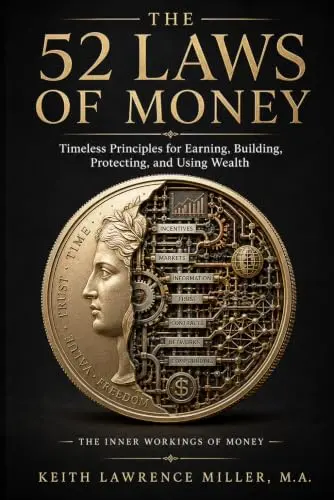
The 52 Laws of Money
The 52 Laws of Money: Timeless Principles for Earning, Building, Protecting, and Using Wealth examines money as a complete system: how value enters exchange, how earning power develops, how income becomes ownership, how businesses create leverage, how uncertainty affects capital, how wealth is protected, how psychology distorts financial judgment, and ultimately what money is for.
The book's 52 laws are not promises of financial success. They are recurring principles intended to help readers see the forces shaping financial decisions more clearly.
This book teaches principles. It does not make promises.
Career strategy and earning power
Ivy League Coaching works with professionals and executives navigating career advancement, compensation, negotiating position, career mobility, reinvention, and the professional decisions that shape earning power and long-term choice.
Visit IvyLeagueCoaching.com to explore Career Strategy and Executive Coaching.
Explore the BookCareer Strategy and Earning Power
Strengthen the professional choices behind earning power.
Ivy League Coaching supports professionals and executives navigating career advancement, compensation, negotiating position, career mobility, reinvention, and the professional decisions that shape earning power and long-term choice. Ivy League Coaching does not provide investment management, financial planning, tax, legal, accounting, or insurance advice.
Educational Notice
This article is intended for general educational and informational purposes only. It does not provide individualized financial, investment, tax, legal, insurance, accounting, or estate-planning advice. Financial decisions depend on individual circumstances, risks, objectives, and applicable rules. Qualified professionals should be consulted when individualized guidance is required.